

Dental Crowns and Bridges at Smile Circle Dental in Aurora IL
Smile Circle Dental in Aurora IL provides dental crowns and bridges for patients who need to strengthen damaged teeth or replace missing ones in a way that looks natural and feels dependable. Led by Amjad Ali and Naela Sayeeduddin, our team helps patients restore comfort, chewing ability, and confidence with treatment designed to blend into the smile rather than stand out. Whether the concern is a weakened tooth or a visible gap, treatment is planned to restore everyday function while preserving a natural appearance.
What Are Dental Crowns and Bridges?
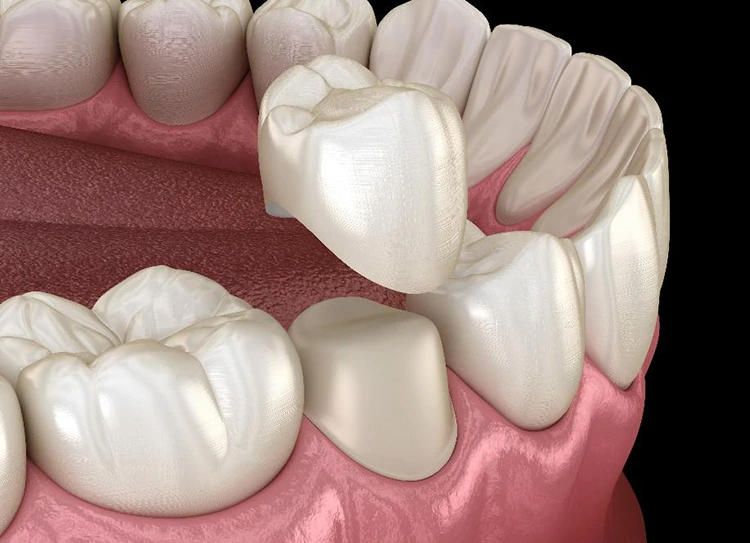
A dental crown is a custom-made covering that fits over a tooth when the natural structure is no longer strong enough to function well on its own. It is often recommended when a tooth has been weakened by decay, fracture, or a large filling. Once placed, the crown covers the visible portion of the tooth and helps protect the remaining tooth structure.
A bridge is used when one or more teeth are missing. It fills the space by attaching an artificial tooth to neighboring teeth that act as support. The replacement is shaped to fit naturally within the bite, so the area feels stable during normal use.
Although crowns and bridges serve different purposes, both are designed to restore everyday comfort. They help patients chew more easily, protect remaining tooth structure, and improve the appearance of the smile in a way that feels natural rather than artificial.
Many patients come in because a tooth has become difficult to treat. It may crack when chewing, feel weak around an old filling, or look noticeably different from nearby teeth. In other cases, the concern is a missing tooth that affects eating, speaking, or confidence when smiling. The goal is not only to repair the area but to make it feel dependable again.
When a Crown or Bridge May Be Recommended
A crown is often recommended when a tooth is still present but no longer strong enough to handle daily pressure without added protection. This may occur after a large cavity, after root canal treatment, or when a tooth fractures and needs reinforcement.
A bridge is usually recommended when a tooth is missing, and the neighboring teeth are healthy enough to support replacement. It can help restore bite balance and prevent nearby teeth from shifting into the open space over time.
Some patients notice changes gradually. A tooth may become more sensitive, harder to chew on, or begin to chip around an older restoration. Others come in after a tooth has already broken and want to know whether it can still be saved.
Before treatment begins, Amjad Ali and Naela Sayeeduddin examine the tooth, surrounding structure, and bite to determine which option makes the most sense. In some cases, the answer is straightforward. In others, the decision depends on how much healthy tooth remains and how the area functions during chewing.
Why Patients Choose Crowns and Bridges
Crowns and bridges are often chosen because they solve practical problems while preserving a natural appearance. The goal is to restore strength and function without making the smile look noticeably different.
Benefits may include:
- Restoring strength to a weakened tooth
- Replacing a missing tooth without a removable appliance
- Improving chewing comfort
- Blending naturally with nearby teeth
- Helping maintain bite balance
Many patients describe the biggest relief as being able to chew without thinking about one side of the mouth. A crown often brings reassurance when a tooth has felt fragile for a long time. A bridge helps close a space that may have made speaking or eating feel awkward. Both treatments are built around long-term daily comfort.
What Happens During Crown Treatment?
Crown treatment usually takes two visits unless same-day options are available. The tooth is prepared first so the crown can fit securely and comfortably.
The process usually includes:
- Tooth Preparation: The tooth is shaped to create space for the crown.
- Impressions: A model or digital scan is taken to create a custom-made crown.
- Temporary Crown: A temporary covering protects the tooth while the final crown is being made.
- Final Placement: The permanent crown is carefully placed and adjusted.
- Bite Check: The bite is checked to ensure the crown feels natural during chewing.
The final result should feel stable and blend naturally with surrounding teeth.
What Happens During Bridge Treatment?
Bridge treatment follows a similar process, but neighboring teeth help support the final restoration. Those supporting teeth are prepared so the bridge can fit securely across the missing space.
The process usually includes:
- Support Teeth Preparation: The teeth next to the gap are shaped to support the bridge.
- Impressions: Measurements or digital scans are taken for an accurate fit.
- Temporary Restoration: A temporary bridge may be installed while the final bridge is being constructed.
- Final Placement: The permanent bridge is carefully secured and adjusted.
The bridge is designed to fit naturally into the bite and comfortably restore the missing area.
How Long Do Crowns and Bridges Last?
Crowns and bridges are designed to last for many years when properly cared for. Daily brushing, flossing, and regular dental visits remain important because the supporting teeth and surrounding gums still require protection.
A crown protects the tooth underneath, but that tooth still depends on healthy habits to remain stable over time. A bridge also needs attention around the edges and under the replacement tooth to prevent plaque buildup.
Many patients keep crowns and bridges for years when they stay consistent with home care and regular checkups.
Choosing Between a Crown, Bridge, or Implant
Sometimes more than one treatment option is available, and the best choice depends on the condition of the area and long-term goals.
A crown is used when the natural tooth can still be preserved. A bridge replaces a missing tooth by using neighboring teeth for support. An implant replaces a missing tooth without relying on adjacent teeth.
Each option has advantages depending on bone support, surrounding teeth, and bite function. Our doctors review these factors carefully before recommending treatment.
Schedule Your Consultation
If you have a damaged tooth, an old restoration that no longer feels secure, or a missing tooth affecting your smile, crowns and bridges at Smile Circle Dental in Aurora, IL can help restore daily comfort. Our doctors will examine the area, explain your options, and help you choose the treatment that fits best.
Call (630) 757-3100 to schedule an appointment.

OFFICE HOURS
Monday
10:00am - 6:00pm
Tuesday
10:00am - 6:00pm
Wednesday
Closed
Thursday
10:00am - 6:00pm
Friday
10:00am - 5:00pm
Saturday
9:00am - 2:00pm
By Appointment Only
Sunday
Closed

Smile Circle Dental
1535 Butterfield Rd Ste 115
Aurora, IL 60502